

The biggest breakthroughs in artificial intelligence aren’t happening in lines of code alone—they’re happening in silicon. As AI models grow more complex, traditional CPUs have become a critical bottleneck, struggling to handle the massive parallel computations required for modern machine learning. This slowdown limits everything from large-scale data analysis to real-time AI on personal devices. In this article, we break down how specialized processors—GPUs, TPUs, and neuromorphic chips—are driving AI chip innovation and unlocking new performance levels. You’ll gain a clear, practical understanding of how hardware advances directly shape AI capabilities, from cloud data centers to the smartphone in your pocket.
Why General-Purpose CPUs Fall Short for AI Workloads
At the heart of computing lies a simple distinction: serial vs. parallel processing. Serial processing means handling one task at a time, step by step—like reading a book line by line. Parallel processing, on the other hand, tackles many tasks simultaneously, like a classroom of students solving the same math problem at once.
Traditional CPUs (Central Processing Units) are masters of serial work. They’re designed with a few powerful cores, large caches, and sophisticated control units to execute complex instructions in order. That’s perfect for running operating systems, managing applications, or handling spreadsheets. In short, they’re like a single master craftsman—precise, adaptable, and skilled.
However, training a neural network is less like carving a statue and more like building a skyscraper. It requires:
- Thousands (sometimes millions) of small mathematical calculations
- Repeating those calculations across massive datasets
- Performing them all at the same time
Here’s the mismatch. Asking a CPU to train a neural network is like hiring that master craftsman to lay every brick alone. Impressive? Sure. Efficient? Not even close.
That’s why modern machine learning depends on hardware built for large-scale parallelism. This shift toward AI chip innovation reflects a simple truth: when the job demands thousands of simultaneous calculations, you need a construction crew—not a solo artisan.
The GPU Revolution: From Gaming Graphics to AI Powerhouses
The Accidental Breakthrough
Graphics Processing Units (GPUs) were built to render millions of pixels at once—handling parallel tasks simultaneously rather than sequentially like a traditional CPU (Central Processing Unit). That architectural choice, designed for lifelike gaming visuals, turned out to be perfect for deep learning. Why? Because neural networks rely heavily on matrix multiplication—a mathematical operation where large grids of numbers are multiplied together. Training modern AI models can require billions of these calculations per second (Goodfellow et al., Deep Learning, MIT Press). What started as a tool for smoother gameplay became the engine of modern AI (talk about a plot twist worthy of a sci‑fi reboot).
Technical Deep Dive
At the heart of NVIDIA GPUs are CUDA cores, specialized processing units that execute thousands of threads in parallel. CUDA (Compute Unified Device Architecture) lets developers harness this parallelism for general computing—not just graphics. In 2012, researchers used GPUs to train AlexNet on ImageNet, cutting training time dramatically and winning the competition by a large margin (Krizhevsky et al., 2012). Tasks that once took months on CPUs dropped to days—or even hours—on GPUs. That leap wasn’t incremental; it was exponential.
ASICs and the Rise of TPUs
As demand grew, Application-Specific Integrated Circuits (ASICs) emerged. Google’s Tensor Processing Unit (TPU) is purpose-built for tensor operations—multidimensional arrays central to AI. Compared to GPUs, TPUs offer greater efficiency for inference workloads, delivering higher performance per watt (Google Cloud TPU benchmarks). Critics argue GPUs remain more flexible for diverse workloads—and they’re right. But for targeted AI tasks, TPUs push AI chip innovation further. For deeper hardware breakdowns, see https://lcfmodgeeks.com.
The Next Frontier: Neuromorphic and Optical Computing
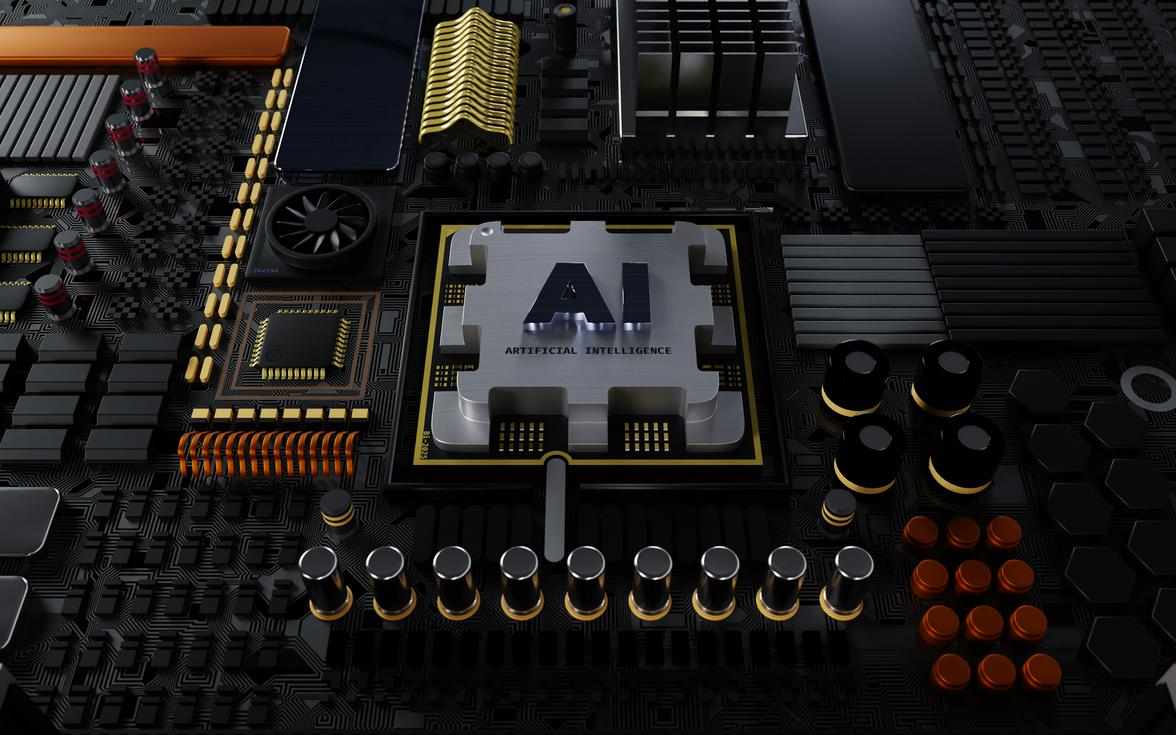
For decades, computing has relied on brute force: pack in more transistors, crank up clock speeds, and manage the heat. However, that approach is hitting physical and economic limits. Enter neuromorphic computing—a paradigm shift that designs chips to mimic the human brain’s neurons and synapses. Instead of processing instructions sequentially like traditional CPUs, these systems use event-based processing, meaning they only compute when a signal (or “event”) occurs. No event, no energy wasted (your laptop’s fan would approve).
At the core are spiking neural networks (SNNs)—models that transmit information as discrete electrical spikes, similar to biological neurons. Compared side-by-side, classical deep learning systems require constant power and massive datasets, while SNNs promise real-time learning with dramatically lower energy use. Critics argue neuromorphic systems are still experimental and difficult to program. That’s fair. Yet chips like Intel’s Loihi demonstrate practical gains in robotics and sensory processing, where rapid, low-power decision-making matters more than raw speed.
Meanwhile, optical computing takes a different route. Instead of electrons, it uses photons—particles of light—to perform calculations. The comparison is stark: silicon chips generate heat and face resistance limits; photonic processors compute at near-light speed with minimal thermal buildup. While skeptics question scalability, breakthroughs suggest optical layers could complement AI chip innovation rather than replace silicon entirely.
If you’re tracking disruptive shifts, explore quantum computing breakthroughs to watch this year. Because whether through neurons or photons, the post-silicon era is no longer science fiction—it’s engineering in progress.
Real-World Impact: From Edge AI to Cloud Supercomputers
Energy-efficient, specialized chips now run AI directly on smartphones and smart cameras, cutting latency to milliseconds and keeping data on-device. For example, Apple’s Neural Engine processes up to 35 trillion operations per second while preserving user privacy (Apple, 2023). Meanwhile, training large language models requires massive GPU and TPU clusters; OpenAI confirmed GPT-4 relied on thousands of high-end GPUs operating in parallel (OpenAI, 2023). Consequently, AI chip innovation underpins everything from edge alerts to cloud supercomputers. Pro tip: profile memory bandwidth first. Ultimately, understanding hardware lets developers optimize models for performance gains.
Hardware is the New Software: The Future is Forged in Silicon
Artificial intelligence doesn’t advance on algorithms alone—it advances on silicon. The rapid evolution of AI is fundamentally tethered to breakthroughs in microprocessor design. We’ve moved beyond the limits of general-purpose CPUs and into an era of specialized silicon built specifically for neural networks, parallel workloads, and massive data throughput. AI chip innovation is what now powers the models reshaping industries.
The next wave of AI will be defined by chips that think more like brains—faster, more efficient, and less power-hungry. If you want to spot the next big AI breakthrough before it happens, track the hardware. Stay ahead by following emerging chip architectures and performance trends—they’re the clearest signals of what’s coming next.
 Syldric Xevandor, the visionary founder of LCF Mod Geeks, stands at the forefront of modern tech innovation, blending deep technical expertise with a passion for digital evolution. Through his platform, he delivers cutting-edge insights on emerging trends, advanced coding frameworks, modding tools, and performance optimization, empowering a new generation of developers and tech enthusiasts. His mission is simple yet powerful: to make complex technology more accessible, practical, and inspiring for those who want to build, customize, and push the limits of the digital world.